
Workstations
Desks, chairs, pedestals, screens and employee boxes recorded by team or floor.
Office moving across all seven UAE emirates
Call Me Movers coordinates the physical relocation around office zones, business priorities, building access and a destination prepared to receive every labelled group.
A business relocation plan
An office move combines furniture, labelled records, common equipment, personal work areas and two managed properties. The physical work becomes clearer when the business appoints one decision-maker, maps the inventory by zone and identifies what must be available first at the destination.
Call Me Movers focuses on domestic physical moving within the UAE. The written scope should define packing, materials, furniture work, transport and placement. The business remains responsible for data, system shutdown, specialist disconnection, secure records and technical restart unless qualified providers are contracted separately.
Map the workplace
Zone names connect collection labels with the destination plan and reduce uncertainty during unloading.
Desks, chairs, pedestals, screens and employee boxes recorded by team or floor.
Furniture, documents, personal work contents and destination positions confirmed separately.
Tables, seating, presentation furniture and shared accessories identified together.
Front-of-house furniture and priority pieces planned around business presentation needs.
Cabinets, archives, stationery and controlled records assigned clear ownership.
Pantry contents, storage rooms, print zones and common furniture included deliberately.
Survey-led office planning
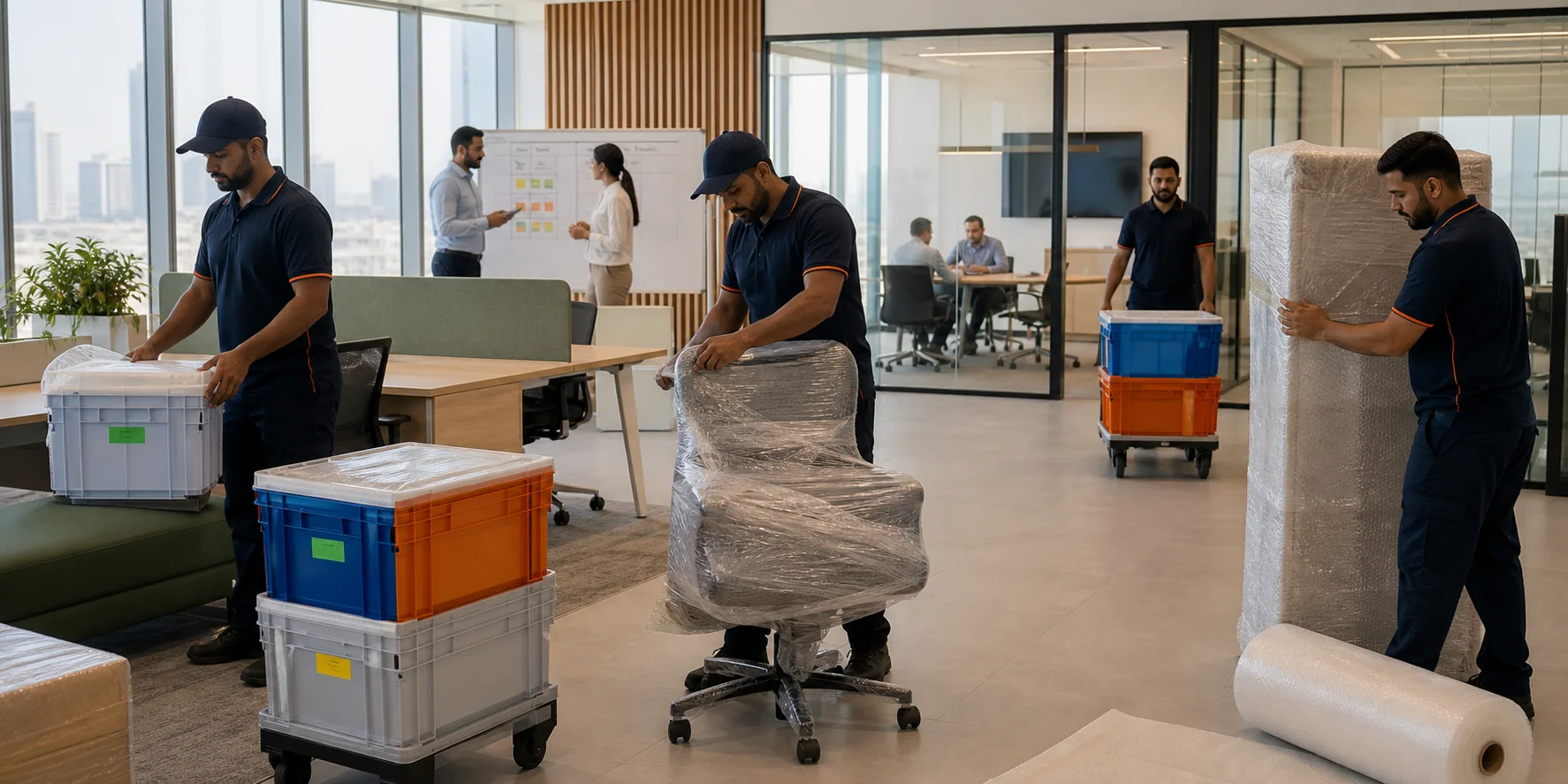
Begin with floor plans, photographs, video or an inventory list. Show work zones, large furniture, cabinets, fragile shared items and anything requiring special review. Then document loading access, service lifts, stairs, parking, security procedures and permitted working hours.
An onsite survey may be recommended when the office, equipment or access cannot be assessed reliably from the supplied information. Remote quotation discussion is free. If an onsite visit carries a fee, that condition should be disclosed before booking.
Move by priority—not by accident
The business should set the order before packing begins, then communicate it through zone labels and one authorised contact.
Reception furniture, critical work zones and agreed materials needed early at the new office.
Workstations, team furniture and shared contents arranged in the planned delivery sequence.
Clearly labelled items that can be delivered after essential areas are ready to receive them.
Technology and records
Call Me Movers does not provide data migration, network design, cybersecurity, server commissioning, electrical work or specialist equipment installation.
Packing and identification
Each carton, furniture component and movable asset should show a destination zone or room code. When practical, add an item number that matches the business inventory. Colour can support the system, but written codes remain important because labels may be viewed in changing light or by different teams.
Full, partial or selected packing can be assessed. Staff-packed contents should be completed before the agreed deadline. Cabinets, desks and drawers are normally emptied unless another arrangement is confirmed. Personal documents, passwords, cash, access cards, keys and small valuables should remain under business control.

Office moving sequence
Choose one authorised business contact for decisions and updates.
Record zones, furniture, packed contents and special-review items.
Confirm both buildings, permissions, lifts, parking and working hours.
Define packing, materials, furniture work, exclusions and sequence.
Load, transport and unload according to the agreed priorities.
Check named areas, remaining items and the vehicle before handover.
 Destination readiness
Prepare the new workplace
Confirm building access, service-lift bookings, loading space, keys and an authorised receiving contact. Display the same room and zone codes used during packing. Mark workstation positions and keep circulation routes clear before the vehicle arrives.
Suitable furniture may be reassembled and placed when included in writing. The business should arrange network, electrical, telephone, security and specialist equipment providers in the correct sequence. Movers can position agreed prepared items, but technical connection and commissioning remain separate.
Inspect visible condition, confirm high-priority zones and check that nothing intended for the destination remains in the vehicle. A signed handover should record material issues promptly.
Timing options
Suitable when the inventory, access and destination can be coordinated for one defined sequence.
Useful when departments, floors or business areas need separate handling windows and handovers.
Same-day feasibility depends on inventory, preparation, buildings, crew, vehicle, materials and route.
Office moving price factors
Two offices with similar staffing can require very different inventories, access and handling plans. We do not publish invented starting prices.
Furniture, cartons, common areas, files and accepted equipment.
Business-packed contents, mover packing, materials and special preparation.
Floors, service lifts, parking, long carries and permitted working hours.
Suitable protection, dismantling, reassembly and destination placement.
One-stage, phased, after-hours or multi-stop requirements when feasible.
Domestic distance, crew time, vehicle needs and confirmed date.
Domestic business coverage
Moves can be assessed within one commercial district, across an emirate or between UAE emirates.
Office moving across business districts and managed buildings, including domestic routes between Dubai and Abu Dhabi.
Business relocations in Sharjah, Ajman, Ras Al Khaimah, Fujairah and Umm Al Quwain.
Clear service boundaries
Domestic office transport, full or partial packing, suitable furniture preparation, dismantling and reassembly, zone placement, selected unpacking, storage and inter-emirate business moving.
International relocation, freight, cargo, pet or vehicle transport, data migration, network configuration, server commissioning, plumbing, electrical work, trade installation, specialist machinery and confidential-record management.
Yes. Call Me Movers covers domestic office moves in Dubai, Abu Dhabi, Sharjah, Ajman, Ras Al Khaimah, Fujairah and Umm Al Quwain, including routes between emirates.
Full, partial and selected packing can be assessed. The quotation should identify materials, zones, staff responsibilities, restricted contents and anything requiring specialist handling.
No. The business should use qualified IT providers for shutdown, disconnection, data protection, network work and recommissioning. Movers may transport suitable prepared and labelled equipment when agreed.
Suitable standard furniture can be assessed for dismantling and reassembly. Construction, condition, dimensions, fixings and manufacturer restrictions determine what is appropriate.
Timing requests can be discussed. Feasibility depends on building permissions, crew, vehicle, inventory, preparation, route and the permitted working window at both properties.
Yes. Separate stored inventory from direct-delivery items and confirm duration, preparation, retrieval needs, access expectations and current facility terms for the actual proposal.
Confirm the authorised contact, final inventory, destination codes and staff deadline. Employees should remove personal belongings, secure credentials and complete any cartons assigned to them. Confidential papers, cash, keys, access cards and sensitive media remain under business control. Clear working routes and identify items that stay. Provide current building contacts, lift bookings, parking instructions and approved hours for both properties.
Report a changed date, address, floor, access rule, working window, inventory zone, additional stop or packing responsibility. Added cabinets, bulky tables, fragile items or unprepared equipment may affect crew time, protection and vehicle planning. Keep decisions in writing and ensure the business lead communicates the same version internally. The quotation for the actual booking—not general website wording—defines the agreed work.
The business should classify confidential documents and decide who may handle them. Back up systems, remove passwords and credentials, control data-bearing devices and use qualified technical providers. Label prepared equipment without exposing sensitive information. Movers are responsible only for physical tasks written into the scope; they do not certify data security, record retention, legal compliance, network integrity or successful technical restart.
Current payment methods, deposit requirements, cancellation conditions and booking terms are confirmed with the written quotation. Same-day or emergency office moves are assessed rather than guaranteed. Availability depends on inventory, access, permissions, preparation, crew, vehicle and materials. A reduced scope, phased plan or later workable date may be discussed when the full request cannot be completed responsibly at short notice.
Before delivery, identify the areas that must function first and make sure they are physically ready. Confirm furniture positions, clear access, working lighting and the authorised receiving team. Arrange qualified IT and facilities providers around the moving sequence so their work does not obstruct unloading. Keep essential business documents, access tools and employee instructions outside the general inventory. The moving team can follow the agreed placement plan, while the business controls operational testing and staff return.
Storage may support a delayed fit-out, staged relocation or reduction in floor space. Separate stored items from direct-delivery inventory and apply a distinct label system. Record expected duration, preparation, retrieval priorities and who can authorise access. Confirm facility conditions, prohibited contents and current terms for the actual proposal. Website wording should not be treated as proof of climate control, surveillance, insurance or a specific facility condition unless it appears in the applicable agreement.
Start with zones and priorities
Share both offices, inventory zones, building access, preferred date, packing needs and destination priorities.
Final planning note
An office handover works best when departments, workstations and priority equipment use the same labels at collection and destination. The customer retains confidential records, credentials and authoritative backups, and arranges IT, electrical and specialist technicians separately.
Before approving Office Movers, compare the latest written scope rather than a headline package. Confirm what is included, what remains the customer's responsibility, the current price and booking terms, and how a change to inventory, access, date or destination will be handled.
Keep one reachable decision-maker available throughout the work. That person should know the accepted inventory, hold the necessary keys and permissions, confirm destination placement and report a concern while the relevant item, room or vehicle can still be checked.
Photographs and video can clarify volume, dimensions and access, but they should show the complete requirement rather than selected easy areas. A larger or restricted move may still benefit from an onsite assessment whose terms are explained before the appointment.