
Retail stores
Display furniture, counters, shelving contents and back-of-house items organised by destination zone.
Domestic business moving across the UAE
Call Me Movers coordinates movable business contents for retail spaces, studios, clinics and general commercial premises—without presenting freight, cargo or specialist machinery work as an ordinary move.
A scope built around operations
A shop, studio, clinic or general business premises can contain customer-facing furniture, back-of-house stock, records, displays, shelving and prepared equipment. Each category has a different owner, destination and urgency. A dependable plan separates those categories before quoting.
Call Me Movers handles domestic physical moving and storage support within the UAE. The business remains responsible for regulated goods, confidential information, technical shutdown, trade disconnection and specialist installation. Clear boundaries protect the schedule and help every provider arrive in the correct order.
Premises we can assess
Every request is reviewed against the actual movable contents, access and exclusions rather than accepted from the premises label alone.
Display furniture, counters, shelving contents and back-of-house items organised by destination zone.
Movable furnishings, sample stock and presentation pieces assessed for protection and access.
Ordinary furniture and prepared movable contents only; medical devices and regulated materials require specialists.
General furnishings, supplies and packed records arranged around the new operating layout.
Suitable furniture, packed stock and ordinary movable items—not freight forwarding or industrial machinery.
Tables, seating, cabinets and prepared learning materials grouped by room and priority.
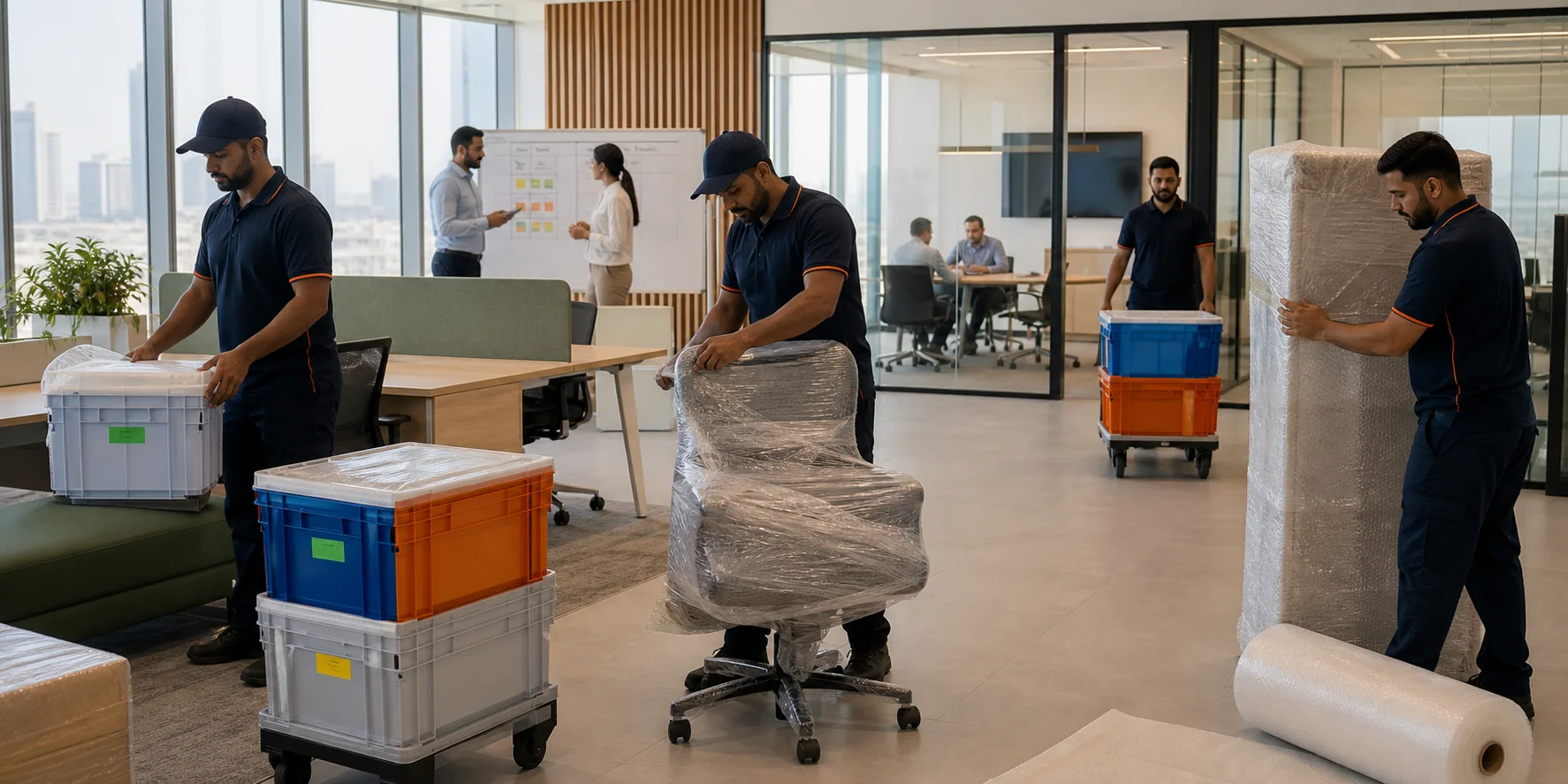
Commercial move assessment
Provide photographs, video, floor plans or an item list covering customer areas, work zones, stores and loading access. Identify fragile displays, oversized pieces, stock categories, prepared equipment and anything fixed to the building.
An onsite survey may be recommended when the premises, inventory or route cannot be understood reliably from supplied information. Remote quotation discussions are free. Any fee for an onsite visit should be disclosed before booking.
Classify before packing
Identify built-in, leased or landlord-owned elements so they are not treated as movable inventory.
Furniture, cartons, shelving contents and suitable prepared items included in the moving scope.
Confidential files, cash, keys, credentials and sensitive materials kept under authorised business control.
Machinery, regulated goods, installations and unsuitable equipment referred to qualified providers.
Property and operating access
Commercial properties often combine management rules, public access and fixed operating windows.
Commercial packing
Full, partial or selected packing can be assessed. The label system should identify destination zone, item group and priority without exposing confidential information. Where stock is included, the business should decide how quantities and categories will be controlled.
Contents packed by employees should be finished before the agreed deadline. Cabinets, drawers and shelving are normally emptied unless another condition is written into the quotation. Perishables, hazardous materials, regulated goods and unsuitable contents should be removed from the ordinary moving inventory.

Commercial moving sequence
Choose one authorised contact to approve scope and direct priorities.
Review inventory, property access, restrictions and destination readiness.
Separate mover work, business-controlled items and specialist tasks.
Complete agreed packing and apply destination-zone identifiers.
Load and transport suitable agreed contents within the UAE.
Position items by zone and record material issues promptly.
 Handover-ready destination
Destination control
Confirm handover, keys, management approval, loading access and an authorised receiving contact. Display destination codes and mark important positions before the vehicle arrives. Keep contractor materials and fit-out work away from the moving route.
Suitable standard furniture may be reassembled and placed when included. The business should arrange qualified providers for electrical, plumbing, IT, security, refrigeration, medical, display installation and other specialist work.
Inspect visible condition, confirm priority zones and complete a final vehicle check. Operational testing, stock reconciliation and technical commissioning remain with the business and its relevant specialists.
Business continuity choices
Suitable when both properties and the complete accepted inventory can support one planned operating window.
Useful when customer areas, stores or business functions need separate collection and delivery windows.
Same-day availability is not guaranteed and depends on preparation, access, resources, route and permissions.
Commercial moving price factors
Floor area or business type cannot describe the complete workload by itself. Call Me Movers does not publish invented starting prices.
Furniture, cartons, suitable stock, displays and accepted equipment.
Materials, fragile preparation and business or mover responsibilities.
Floors, lifts, loading bays, gates, long carries and working hours.
Suitable protection, dismantling, reassembly and zone placement.
Single-stage, phased or multi-location work when practically feasible.
Domestic distance, crew, vehicles, materials and confirmed date.
Domestic UAE coverage
Suitable business relocations can be assessed within one district, across an emirate or between emirates.
Commercial moving across managed retail and business districts, including domestic routes between the two emirates.
Business-premises moving in Sharjah, Ajman, Ras Al Khaimah, Fujairah and Umm Al Quwain.
Clear service boundaries
Domestic transport of suitable business contents, full or partial packing, standard furniture preparation, zone placement, selected unpacking, storage and inter-emirate moving.
International relocation, cargo, freight forwarding, pet or vehicle transport, hazardous or regulated goods, industrial machinery, trade disconnection, data work, plumbing, electrical work and specialist installation.
Commercial moving questions
Retail stores, studios, showrooms, training rooms, small business units and suitable ordinary contents from other premises can be assessed. Acceptance depends on the actual inventory, access and required work.
No. Call Me Movers focuses on domestic UAE moving and storage. Freight forwarding, cargo and international relocation are outside the service.
Suitable ordinary furniture, packed stock and movable business contents can be assessed. Industrial machinery, hazardous materials, regulated goods and freight operations require appropriate specialist providers.
Selected packing can be assessed. The business should identify quantities, fragile pieces, controlled products and stock-reconciliation responsibilities before the quotation is confirmed.
Requested working windows can be discussed. Feasibility depends on property permission, inventory, preparation, access, crew, vehicle, materials and route.
Yes. Separate stored inventory from direct-delivery items and confirm duration, preparation, retrieval needs, access expectations and current facility terms for the proposed booking.
Choose the final trading or operating deadline and identify displays or counters that must remain available until late. Remove cash, payment devices, credentials, controlled documents and small valuables from the moving inventory. Separate landlord fixtures and leased equipment from business-owned movable contents. Arrange qualified providers for signage, electrical, refrigeration, security and specialist installation. Keep customers away from active handling routes and communicate closure or access restrictions internally.
The business owns stock counts, product classification and reconciliation. Group suitable packed stock by destination, category and priority without exposing sensitive information. Remove perishables, liquids, hazardous substances and regulated goods unless a qualified service has accepted them separately. Record sealed cartons through the business process and appoint authorised staff at both properties. Moving labels guide physical placement but do not replace the company’s inventory-management or compliance records.
Report additional stock, furniture, addresses, floors, access restrictions, stops, dates or working windows early. A change can affect materials, crew time, vehicle planning and whether the requested sequence remains feasible. Keep decisions in writing and ensure one authorised contact communicates the current plan. The quotation for the actual booking defines inclusions, exclusions, payment terms and responsibilities; general website wording does not override it.
Storage may support delayed fit-out, staged handover or temporary reduction in space. Separate stored items from direct delivery and use a distinct inventory code. Confirm preparation, expected duration, retrieval priorities and authorised access. Facility conditions, prohibited contents and current terms should be reviewed for the actual proposal. Do not assume climate control, surveillance, insurance or a specific facility feature unless it is stated in the applicable agreement.
Urgent requests can be assessed, but same-day dispatch is not guaranteed. Availability depends on the complete inventory, both premises, permissions, packing status, specialist preparation, crew, vehicles, materials and route. A business relocation may require coordination that cannot be compressed safely. When the full request is not feasible, a reduced written scope, phased sequence or later workable date may be discussed.
Nominate authorised contacts for collection and delivery. Before sign-off, check priority zones, visible item condition and the vehicle. Record material issues promptly through the agreed channel. The business remains responsible for operational restart, stock reconciliation, data integrity, confidential records and specialist commissioning. Qualified providers should complete technical connections and safety testing before staff or customers use affected systems, equipment or installed fixtures.
Start with the actual premises
Share both locations, movable inventory, access, operating priorities, date and packing needs.
Final planning note
A commercial move benefits from one authorised decision-maker, an accepted movable inventory and destination-zone labels. Business records, credentials and system backups remain under customer control, while technical disconnection, installation and commissioning are coordinated with qualified providers.
Before approving Commercial Movers, compare the latest written scope rather than a headline package. Confirm what is included, what remains the customer's responsibility, the current price and booking terms, and how a change to inventory, access, date or destination will be handled.
Keep one reachable decision-maker available throughout the work. That person should know the accepted inventory, hold the necessary keys and permissions, confirm destination placement and report a concern while the relevant item, room or vehicle can still be checked.
Photographs and video can clarify volume, dimensions and access, but they should show the complete requirement rather than selected easy areas. A larger or restricted move may still benefit from an onsite assessment whose terms are explained before the appointment.
The customer should retain the quotation, current contact details and any property instructions until the move is complete. Early written communication creates more workable options than discovering an added stop, unavailable access route or unprepared destination after dispatch.